When President Trump made the fateful decision at the end of February to go into Iran with full force and decapitate its leadership, there were a number of likely consequences to that decision that the President, apparently, did not fully take into consideration. Foremost among these was Iran’s effective closure of the Strait of Hormuz, putting a stranglehold on a critical route of international trade and hence the global economy – an outcome which had been widely discussed and expected beforehand but which, as Trump himself has stated, took him by surprise. It soon became clear that the President had expected a quick and decisive victory in Iran and didn’t fully consider the potential fallout of failing to achieve that.
But it’s not only the consequences of failure that the President and his advisors seem not to have fully considered. It’s also certain consequences of the operation’s success, or even of its having been undertaken at all – especially the success of its decapitation strike, during negotiations, on Iran’s top leaders at the outset. One such consequence is the chilling effect that this move was likely to have on one of the top declared priorities of Trump’s presidency: improved relations with Russia and a negotiated peace in Ukraine. It’s not clear whether he is personally aware – as many of his advisors must be – of certain foreboding undercurrents in Russian political sentiment that have been developing and gaining ground over the past two or three years, and which his invasion of Iran has almost certainly exacerbated.
The long-standing criticism voiced by many of Russia’s more hawkish elites is well known: that President Putin has been slow-walking the war in Ukraine and pointlessly negotiating with untrustworthy Americans, when he should be prosecuting the war more aggressively and bringing it to a decisive conclusion. But in addition to this, there is another current of thought, a more recent one, connected with the possibility of nuclear war: that the Western powers, including the US, have lost their fear of nuclear annihilation – once a powerful deterrent against any serious attack on a rival nuclear power. And that in order to restore this fear, and this deterrent, Russia should seriously consider launching a pre-emptive, tactical nuclear strike – presumably either on Ukraine or on a NATO country arming Ukraine. By all accounts, this somewhat extreme view – a marginal one just a few short years ago – has steadily become more mainstream as distrust of Western intentions has grown.
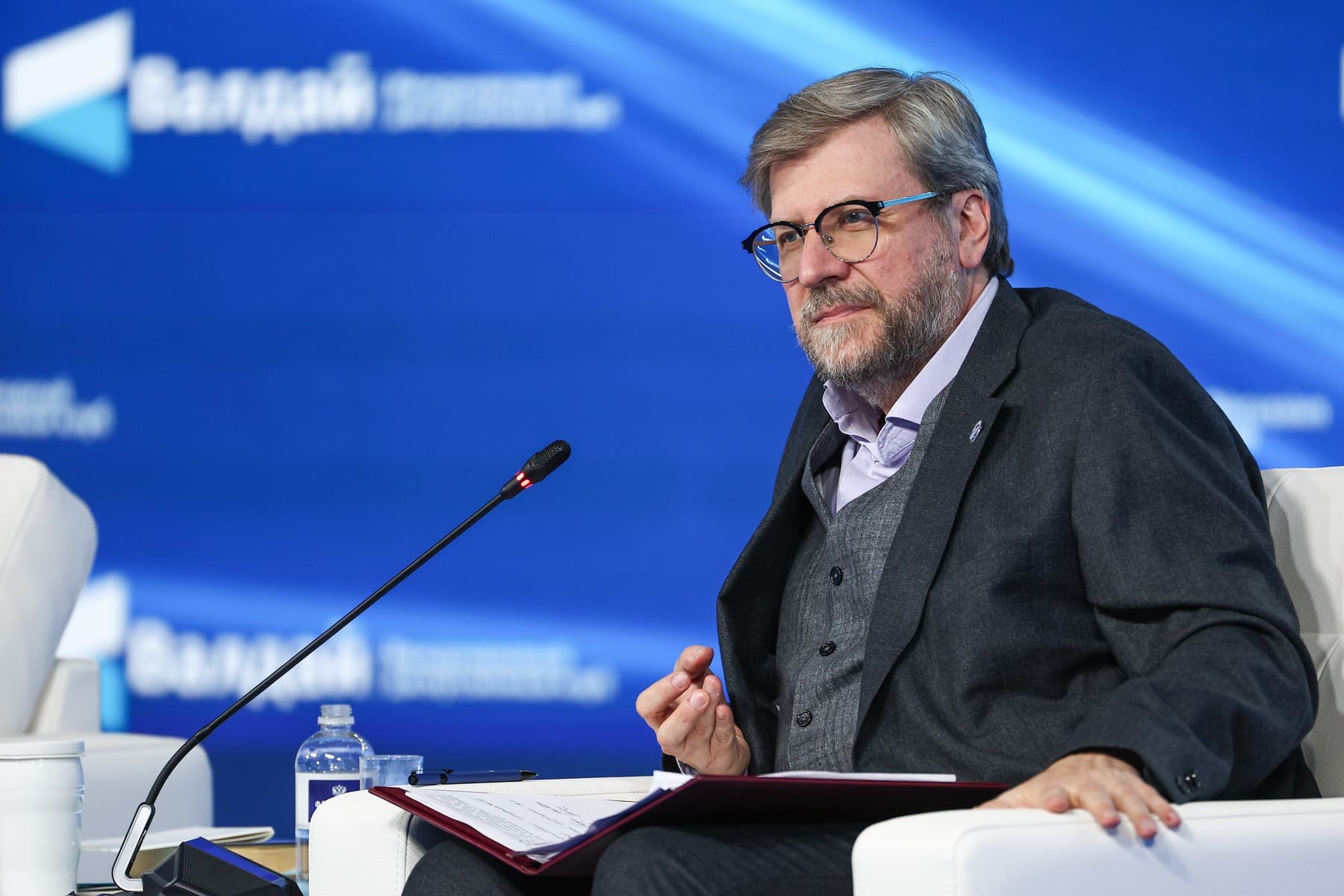
Being vaguely aware of these currents among Russia’s military and political elite, and wanting to learn more about what impact the US attack on Iran has had on the political mood within Russia, I spoke with Fyodor Lukyanov, editor-in-chief and co-founder of the influential online foreign affairs journal Russia In Global Affairs. Widely recognised as one of Russia’s top international relations experts, Fyodor is also Research Director of the Valdai Discussion Club – a group of scholars from around the world that meets every year in Russia to discuss global issues – and teaches a course on International Relations at Moscow’s Higher School of Economics. In December 2025 he was added to the EU’s sanctions list – for reasons that make for strange reading to anyone familiar with his actual work. Marker editor-in-chief Jaro Daniška has offered an insightful account of this episode here.
In addition to the impact of the Iran crisis on Russia, and its severe impacts globally, I also asked Fyodor about the deplorable relations between Russia and Europe – even as Europe faces an impending energy crisis that Russia could conceivably alleviate – and how he sees the future of the war in Ukraine and its likely aftermath. Finally I asked him about the decision of EU leaders to sanction him: what he thinks was behind it, and to what extent it has impacted him personally.
There’s been a lot of discussion about the impact of the war with Iran on the economies and strategic objectives of various countries. And in all these discussions, Russia seems always to come out on top. From your perspective, how has the Iran crisis actually impacted Russia, and the political mood within the country?
Of course this is closely watched in Russia. And I would say the impact is ambivalent. I know that in the West, many commentators assume that what is going on with Iran is favourable for Russia. And it’s true that economically, of course, we see oil prices going up – which is pretty important for the Russian budget at this point, because we have economic problems. And additionally, there’s a further sense that the whole attention of the United States and the Europeans will be diverted from Ukraine, and that the capacity to deliver arms to Ukraine might be limited. Both points are fair. But I don’t believe many people in Russia think that these are significant factors in the long term, or even the medium term. Because what the Americans and Israelis have done has caused a major disruption, obviously. And Trump miscalculated heavily, expecting an easy and quick defeat of the Iranian regime, which of course didn’t happen. And now no one knows how to get out of this. It looks like Trump cannot simply declare victory and go home, because Iran has demonstrated the efficiency and the capacity to block the most important strategic sea route in the world. And if Trump allows Iran to get away with this, it would mean a significant blow, a huge blow to the prestige of the United States. So now the Americans have to do something to unblock it, and to guarantee for the future that something like this will not happen again. And that’s a very risky operation. I can imagine the Americans will simply have to do it, but it’s very risky. But anyway, this is the short term outlook. In Russia, many people are looking at it through a more long term lens. And from this perspective, the whole thing could be pretty devastating for international relations at large.
Well, on that point, the US has actually made a series of aggressive moves recently: first Venezuela, then Cuba – which is ongoing, the Americans may well invade – and now Iran. And in the case of Iran, the US attacked and killed their leaders while actually in negotiations with them. And of course, Russia is also in negotiations with the US. How does this sort of thing affect diplomatic relations, especially with countries like Russia that have an adversarial relationship with the United States? Are people in Russia looking closely at this? Are they worried about it?
Yes, absolutely. People both at the top, and in the more rank and file public, have come to a couple of conclusions based on what happened this year, starting with Venezuela and then all the other moves. First of all, as you said, diplomacy has been discredited – heavily, massively. Because what the Americans and Israelis have demonstrated – with the Americans in the lead – is that negotiations do not mean anything. It can happen that those with whom they’re negotiating will be killed immediately, even during the negotiations. This was already demonstrated to a lesser extent last year when the Israelis attacked Iran, and even more so when they tried to kill the Hamas negotiating team in Doha, in an attack on Qatar. Which was absolutely outrageous, of course. And as you said, these same people, the same US negotiators, are conducting negotiations with Russia. Of course, Russia and Iran are different, it’s not exactly the same. But the aftertaste of that is strong. So it will be pretty difficult for Mr Kushner and Mr Witkoff to fully regain trust. Secondly – and from my point of view, this is more important and more dangerous for the international situation – the very fact of the possibility of a decapitation strike, which at once eliminates everybody, the whole political leadership – this is being very seriously considered here. First of all, because it is seen as proof that the Americans are actually capable of doing anything. It’s a kind of lawlessness. Whatever they imagine is to their benefit, they will do.
In terms of assassinations and decapitation strikes, that sort of thing?
Yes, assassinations of leaders – which until recently was not very common. Maybe historically, but not in the 20th century for example. But in Russia, this is having an additional impact. Beginning in 2022, and especially since 2023, we’ve been having an interesting, and somewhat terrifying, debate here in Russia, about the nuclear factor. Some have been arguing that in the case of real trouble, Russia should be ready to use nuclear weapons, even without any nuclear provocation from the other side. The debate was launched by certain commentators and scholars – in particular by Professor Karaganov, a senior colleague of mine. Of course, the idea is not to persuade the whole leadership to use nuclear weapons. Rather it’s the opposite – to avoid this scenario, by lowering the threshold for usage, as a credible deterrent. And to some extent the debate has had an impact, because Russia did correct the concept of its nuclear policy – not in support of immediate usage, but as suggested, the threshold was lowered. Of course, it’s a big debate. I would not say that the people arguing for that view are in the majority here, not at all. But after what happened in Iran, I think the national leadership has moved, at least psychologically, closer to the position of people like Professor Karaganov. Because they see that nuclear arms – the red button, the final red button – might be the only guarantee, the only means against such an aggressive policy. You remember from Cold War times, the whole system of the “dead hand” that could still launch a nuclear attack even after its own country had been annihilated – there’s that famous movie by Stanley Kubrick, Dr. Strangelove. I don’t insist, of course, that we are moving towards that. But again, with the psychological impact of such behaviour on international politics, in particular within Russia, we’re looking at very disturbing scenarios now which we couldn’t imagine a couple of years ago.
Some months ago there was an incident where it looked like Putin’s residence in Valdai was targeted by a drone strike. And I remember there was a general feeling coming out of Russia that the Americans were likely involved – which of course led people to doubt the sincerity of American negotiations. From your perspective, did this incident have a serious impact on how Russians view the Americans?
You know, it’s difficult to judge, because this episode was put on a very high level initially. And we remember some moves – including when Russia’s chief of military intelligence personally visited the US Embassy in Moscow to deliver some documents proving that it was an attack. But the Americans disregarded that. They said they didn’t receive sufficient evidence that this was the case.
I believe he gave them some actual electronics containing targeting data, didn’t they?
Yes, some sort of chip. But paradoxically, the issue then disappeared. We heard no more about it – either in the Russian political position, or in their negotiations, or continued statements. So, I don’t know what that was. But, of course, as we already discussed, what happened in Iran has demonstrated to many Russians that there are absolutely no limits to what the Americans might be willing to do. They’ll do whatever they think is good for themselves, and that’s it. And this is being projected onto everything else – including Ukraine, of course. And the Maduro case – that was something else again. To some extent, it was more shocking – because we had already seen the killing of leaders. We saw it done by the Israelis in Lebanon and in Iran. But just to abduct a functioning head of state – that’s quite new.
Russia has been supporting Iran throughout this conflict – at least, it seems, in terms of providing critical intelligence. And as the situation has escalated – and in response to certain extreme threats made by Trump toward Iran – Russia has at least once issued a strong statement warning the US against a certain course of action. Do you or others in Russia perceive any risk that this situation could lead to a direct confrontation with the US?
Not really. It’s not necessarily the case that we would get into a direct confrontation with the US over this particular issue. It’s true that early last year, a couple of months before the 12-day war, Russia signed a treaty – a strategic partnership – with Iran. This treaty is pretty cautiously formulated, and it’s not binding, I would say. And to be accurate about the Russian position, Russia is in a pretty delicate situation here. Because the Russian leadership actually has a rather tense relationship with Iran – and at the same time basically a good working relationship, and a very extensive one, with the Gulf monarchies. Russia has a lot of converging and diverging interests with Turkey. Russia has a not very good relationship, but an extensive one, with Israel. And in the case of Putin and Netanyahu – I don’t know whether they like or dislike each other, but they normally understand each other very well, because both are pretty straight-to-the-point kind of guys.
And how would you characterize Russia’s current relationship with the Americans?
With Trump, despite all the nuances we discussed earlier, Russia – and Putin in particular – doesn’t want to break with Trump, because at the end of the day there is still the expectation, the hope, that some kind of settlement can be negotiated between Russia and the US on Ukraine. I wouldn’t say it’s a very big chance, or a very high expectation, at this point. But still, it’s something. And Putin doesn’t want completely to disrupt his relationship with Trump. So within this complicated equilibrium of relations, it’s not so easy to know how to navigate in a proper manner. And I think that’s why Putin has been pretty silent. He hasn’t made any statements since the war against Iran began. He’s had a lot of phone calls, and phone diplomacy, and probably discussed certain things with all involved, but never public statements. It’s quite remarkable, really. So again, coming back to your question – at the end of the day, I don’t think Iran’s situation will create a casus belli for Russia to involve itself in a direct conflict with the United States. But the atmosphere is very, very complicated, and there’s a question as to how Russia will be able to manoeuvre through it.
In terms of the global impacts of the war with Iran – apart from energy, a lot of people are also worried about the possibility of a widespread threat to food security. And in the case of the Gulf States, even water security – if the desalination plants are destroyed. And all of this, of course, could lead to more wars. How are these issues being looked at inside Russia?
In terms of Russia itself this is not a big problem, because Russia is self-sufficient when it comes to food security. We do have certain shortages and certain deficits – like for example, in the process of enhancing and improving the whole food industry. Many of those things that are needed have been imported from other countries, from Europe in particular. But in general, Russia can survive very easily in terms of food, even if isolated. But when it comes to the global situation – yes, this is serious indeed. The Ukrainian crisis, when it started, created problems – but they were more or less resolved. Partly by force – to be frank, Russia failed to isolate Ukraine from the world market. But also diplomatically – as despite all the hostility, Russia was not absolutely committed to this. So at the end of the day, it worked. This time it is worse, because we see a blockade of the world’s most important channel through which fertilizers come, and elements to produce fertilizers. And just now, at this time of year, when countries have to prepare for agricultural work – this is really bad. Especially for Asia – in countries like India, Bangladesh and others, this could be really disastrous if it continues. So Russia, of course, is ready to extend support to so-called “friendly countries”, those who did not introduce sanctions against Russia. But the problem is still pretty severe – because even if those countries quickly reorient their relationships toward other partners, like Russia, this cannot be accomplished easily or in a few days. It will take months to rearrange the whole system, and then it will be too late. So I think this is a real possibility, and one of the serious dangers we face. That’s why Trump is so nervous about this, and wants to stop it. But of course, in this situation, the blockade of Hormuz is the only means Iran can employ against the Americans. And of course, they will use it.
Let’s talk a bit about Europe. Obviously Europe has been trying since 2022 to rid itself of all energy imports from Russia, and to a large extent has done so. But now, with the war in Iran and the closure of Hormuz, it seems Europe will be facing a critical energy situation. Is there any sense within Russia that Europe might come and ask to have its energy imports resumed? And what do you think Russia’s response would be if that happened?
Well, I think it’s pretty ambivalent on Russia’s side. On the one hand, to be frank, of course Russia would be very much interested in resuming exports to Europe, because those contracts and relations cannot be replaced. Not with Asia, not with anybody else. Asia might partially compensate for the loss of Europe, but not entirely. But at the same time, the European Union has proved itself to be an absolutely unreliable partner – a 200% unreliable partner. So unreliable, in fact, that it is ready to act against its own interests, even to its own harm – to damage itself, in order to punish Russia. And of course, this makes things very difficult. Even if, theoretically, we assume that the Europeans now decide to come to Russia, it will be very difficult to restore trust, to restore confidence. Frankly, I don’t see it happening. And I cannot imagine how it could, because that would mean basically the elimination, the cancellation of the whole policy conducted by the European Union for more than four years now. And this is not just a policy of confrontation with Russia, or simply the replacement of Russian energy. This is very much a principled position – even proclaimed early on as a holy war, a holy war between good and evil. And nothing has changed since then. Okay, they don’t say it as frequently as they used to do, but it’s still there. The Americans may be more flexible, insisting as they do that they want to negotiate a deal for both sides – that they are not on either side, and so on. Which may be hypocritical, but still, it shows some flexibility. But with Europe, it’s different. Europe is still committed to its initial position: Russia must not gain anything at all from this war – Russia has no right to gain anything. And the war should continue as long as it takes for Ukraine to win. This will be difficult, of course, in the context of a severe energy crisis, but I don’t see how they can change it. Maybe I’m underestimating the flexibility of some European politicians. But so far, they’ve never demonstrated this skill vis-à-vis Russia.
I believe the Belgian prime minister, Bart De Wever, has recently moved a bit in that direction.
Yes – but I think, at the end of the day, it depends on one particular country. It depends on Germany. Because Germany was the biggest consumer. Germany had the most extended relationship with Russia, the biggest economic relationship, biggest energy relationship. And Germany was the key element of this new policy of cutting off Russia: We’ve cut it off completely, we can never restore it, we will never go back, and so on. And historically we know that in many respects, what happens in Germany defines the whole European political environment. So we will see.
I want to ask about the ongoing dispute between Zelensky and Orban. It seems Ukraine is blocking Russian oil going to Hungary, Orban responded by vetoing the EU’s 90 billion euro loan to Ukraine, and Zelensky responded with a thinly veiled threat to kill Orban, or his family. And with Orban up for election this month – an election he could conceivably lose – the EU is trying very hard to use the opportunity to get rid of him. And so it looks like the whole future of the war in Ukraine could be hanging on the results of this one election. How are people in Russia looking at this situation?
Well, this is, of course, a moment of glory for Hungary. Who could imagine that this local election, pretty small on the global scale, would make such a big noise? On the Ukrainian side, Zelensky believes that he can afford to do anything towards anybody because he is in the right – he is fighting against Russia, and so on. As for the election, I would neither underestimate nor overestimate its significance, or the significance of Orban’s position. I suppose that if he wins and remains in power, the European Union will do everything it can to find some way around him – although this will be not easy, because it will undermine many aspects of the European Union. In Russia, I think this situation is seen as a symptom, as one more sign of how severe the gap is between all of us, and of how nervousness creates aggressiveness – from Ukraine towards Hungary, and from Europe towards Hungary and towards anyone they believe is pro-Russian. Although neither Orban nor Fico, for that matter, is really pro-Russian – they are simply trying to keep some kind of balance for their economies.
There are people who believe that all of this tension, all this splintering within the EU, is only going to get worse. How are people in Russia evaluating the future of the EU?
Of course, many people here discuss and speculate about the future of the European Union. And it seems clear that Orban per se, or Hungary per se, cannot undermine the European Union significantly. But we’re hearing more and more dissenting voices, for example from the Belgian prime minister, as you mentioned, or the Italian prime minister, Meloni, who is not in favour of what Trump is doing in Iran, for example. I think the European Union is in confusion – in a confused situation. To some extent this is bad for Russia, because a confused European Union – which is feeling serious problems regarding its own integration – needs the Russian menace, and needs Ukraine as a herald of the free world, in order to keep itself going and to deal with internal problems. It needs to divert public opinion away from its multiple internal troubles, and towards this issue of an imagined external threat. As we discussed earlier, some people – especially in the West – believe the Russians are very happy to see what is happening in the European Union. Okay, there might be some Schadenfreude, but on the whole Russians understand that an uncertain, nervous and confused European Union might become even less able to make rational decisions vis-à-vis Russia.
Coming back to Ukraine – how do you see the future of that conflict, and its possible resolution? What do you think Ukraine will look like, and Russia-Ukraine relations, after this war is finished? It seems obvious there are nationalists in Ukraine that won’t accept any kind of settlement, and presumably they will still have weapons. How does this future look from your perspective?
It’s a question which I can hardly answer, because the outcome of this war – the endgame – is still not clear. In spite of the fact that Russia generally prevails on the battlefield, this advantage has not been enough to achieve a breakthrough. It’s not easy for us to admit, but the Ukrainians are resisting pretty bravely. Nobody can be sure that it will end anytime soon – for example with the collapse of Ukrainian defences or the Ukrainian state. This could happen, because the severity of internal problems within Ukraine is huge. It’s really enormous, and it’s growing – in terms of demography, in terms of everything. But no one knows when. And to be honest, Russia is suffering some problems as well. The whole situation has turned into a full-scale attrition war, and there’s no telling how long it will continue. I think we are approaching a point where the situation will be clarified, either diplomatically or militarily – but again, I don’t dare to guess. What is clear, however, about any post-war Ukraine-Russia situation, is that any Ukraine that will still be in place after the war – reduced, exhausted, destroyed, whatever – any remaining Ukraine will be an arch-enemy of Russia. And it will be something worse than the India-Pakistan situation.
Worse than India-Pakistan?
Yes, worse. It will be similar, but much worse, because of the closeness of the two countries – because of many things. And I think many people here understand that if Ukraine remains in place – however this war ends – Ukraine will pose a very long-term problem and threat to Russia. And there’s no reason to believe that Ukraine will disappear or be totally destroyed. And that’s why some people here argue that we shouldn’t stop – even if it’s difficult, even if it’s costly, we should continue. Because otherwise, we will create a huge precondition for another war to happen pretty soon. And that war might be much worse than this one, because then it will be a war between Russia and NATO, not between Russia and Ukraine. And so that’s part of the current debate. I wouldn’t say it’s the only view, but that’s what you can hear in Moscow and in many other places.
Is there still actually a worry that Ukraine could end up joining NATO? Because it seems to me that a lot of people on the European side have pretty much given up on that.
No, not necessarily joining NATO. Because NATO has no appetite for it, because Ukraine has finally realized it’s a bad idea, because the Americans are absolutely not in favour of it, and so on. But the question of formal NATO integration is just a symbol – it’s not something that actually matters. The scale to which Ukraine is already part of the Western military and political machine is enough. You don’t need to be formally integrated into NATO. What’s probably more important for the Ukrainians is the European Union. Because if they were to join, that would create new opportunities. But frankly, I simply cannot imagine that the European Union would accept such a Ukraine. That would ruin the European Union completely, both economically and politically.
So when you say Russia is worried they could be at war with NATO next time, you’re not talking about Ukrainian membership – you mean a direct war with NATO?
Yes, I mean a war with NATO. Because the European part of NATO will never, in a sense, surrender – they will never accept the fact that this war brought about this result. And in the event that a new war does erupt after some time, I’m afraid that this new war will be much harder. There will be much more mutual hatred, even compared to what we have today. A postponed hatred is sometimes worse than the present one.
You mentioned earlier that Orban and Fico are kind of exceptional in that they’re not really pro-Russian, but are pragmatic and looking after their own economies, which involves having decent relations with Russia. Does Russia see Hungary and Slovakia today as somehow different from the rest of Europe? And what do you think Russia’s attitude will be towards these countries in the context of future situations or confrontations?
Yes, indeed, Russia sees Hungary and Slovakia as countries with a different position. And despite the fact that both countries are very small, they’ve demonstrated a very firm position, both of them. Which is, of course, appreciated in Russia very, very much. But having said that, realistically speaking, of course neither Hungary nor Slovakia, nor even a larger bunch of central European countries – which might include Czech Republic under Babiš, or I don’t know, maybe Bulgaria – would be enough to make an important, decisive influence on European policy. And to imagine a separate relationship between Russia and individual countries inside the European Union, countries that have different positions, that’s very difficult. Because how to go about this? These countries are so fully integrated into the European system that they are basically limited in their sovereign decision-making. Which was the whole idea, after all, of integration. Of course, in the middle-term perspective, I can guess – and many Russian experts expect – that the European Union will change as well. Because European integration, as it was designed in the 20th century and then developed in the 21st century, cannot survive. It will change. I don’t mean the collapse of the European Union – I mean that the model of integration will need to change in order to correspond to what is now a completely different international environment. And then we will see. But so far as I understand, there is absolutely no clear idea within Europe itself as to how to change it – neither among the establishment, nor among those so-called populist parties. Because the original model seemed to be forever – but now it is not.
Do you mean because of international pressures – the various wars, Ukraine and Iran, and now energy issues? The pressure on Europe because of all these things coming together?
Yes, indeed, all these things are coming together. But I think the more important factor is that the whole idea of this European integration was designed for a peaceful world. Even during the Cold War – because the Cold War in Western Europe was actually pretty peaceful. There were a lot of fears, but it was a very stable, peaceful situation. And of course, after the Cold War, people believed that all the big threats were now gone. So this model was not designed for a wartime situation. And the world today is moving towards a situation of war in general – not just Iran, not just Ukraine, but in general. There is a very, very high level of hostilities, and at all levels. So Europe will have to change.
You personally have been targeted by Europe and added to the EU’s sanctions list in December, along with a number of others. Did this surprise you? What do you think is behind it? And to what extent has it impacted your life?
I did expect it, actually, because I’m a public person. I’m very much on the stage and the screen, and I appear once a year with the President of the Russian Federation. So the whole world sees me. And actually, if you read the explanation for the sanctions as written in the official document, I felt very much pleased.
Pleased?
Because it seems my role was highly appreciated – my role as a person who shapes Russian debate, who shapes Russian public opinion. I never believed I was that important. So I would like to thank the external service of the European Union for pointing this out. As to whether it’s had an impact on my life – to some extent, yes. Because I cannot travel to the European Union anymore. I haven’t done so anyway for quite some time, and I didn’t have any plans to do so, but still – before this, there was at least the possibility, and now that’s been ruled out. My only real disappointment is that my favourite city in the world, which I love passionately, is Rome. I think it’s absolutely the best city in the world, and unfortunately I can no longer visit it. As for practical life – yes, the sanctions of the European Union do have a certain impact on my capacity to make financial transactions – even with countries which are not part of the European Union. The influence of the Western world, both America and Europe, is quite big actually, even on places that are outside it.
How do you perceive this step taken by the European Union, in terms of its actual effectiveness in bringing about some sort of result?
I think it’s a stupid move. Because, if we assume that sanctions are designed to have an influence on policy, this will not change anything. First of all, because I’m simply not someone who can shape policy. And secondly, even if I could, I don’t believe that under pressure I would. And there’s another aspect to this. The ability to communicate with our counterparts in the West – to interact, to discuss important issues – is now absolutely minimized, limited to almost zero. Because people like me, and my colleagues in the Valdai Club and other organizations affected by these sanctions – yes, we are on the side of the Russian Federation, but we are always trying to find ways to build up or maintain relationships, in particular with people in the European Union. And in fact, within the Russian context we are actually quite liberal. If the European Union rejects us, then I’m afraid Europeans will not have any vis-à-vis in Russia for a very long time. Okay, that’s the choice they make. We can live without it. But it’s strange. And frankly, I could not imagine something like this happening five years ago.
Do you have any sense of whether these sanctions will outlast the war – whether you’ll still be sanctioned even after open hostilities cease and there is some sort of dialogue, some normalisation?
Yes, I think it will outlast the war. And I’m afraid that even after the war – even in the beginning stages of normalisation – there will be a very long process of bargaining. Both Europeans and Russians – because we introduced many sanctions as well – will attempt to sell them back at the highest possible price. So frankly, I don’t expect the sanctions to be lifted during my lifetime. I’m not so old, but not so young either.