
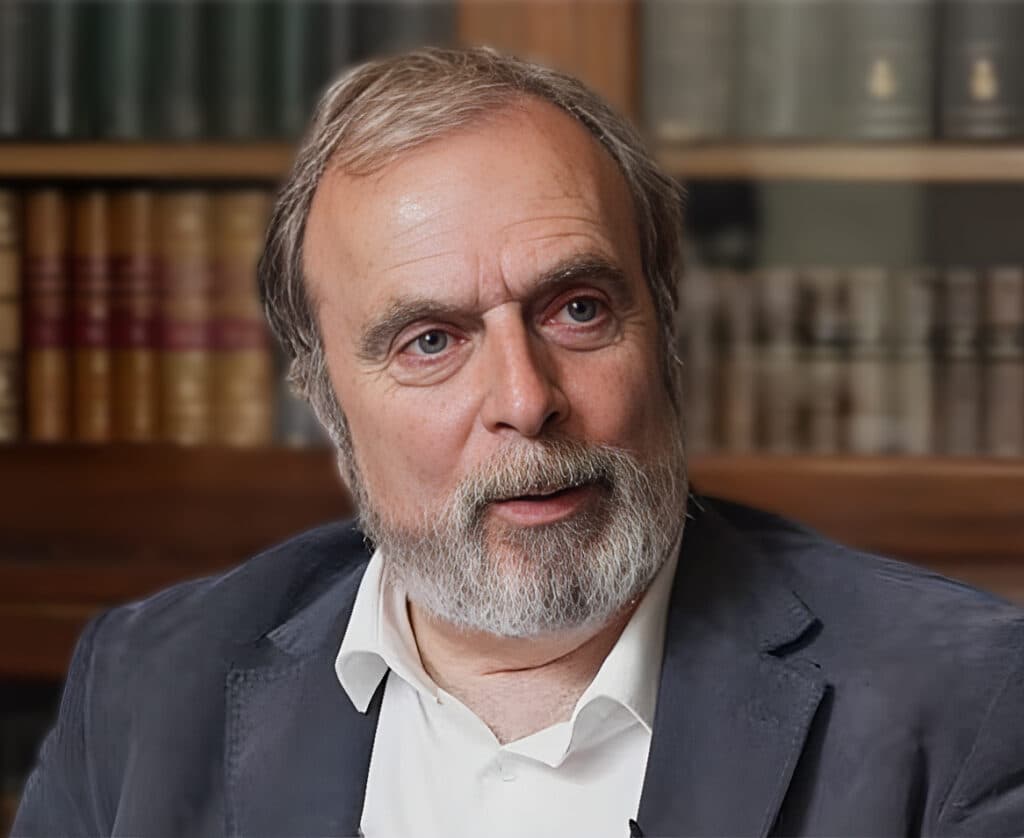
Peter Hitchens: The New Atheist attack on religion was a shot in the arm for Christianity
People reproach believers for being motivated by fear. But if you've never been motivated by fear, you are very foolish, says Peter Hitchens.

In 2007, popular British author and journalist Christopher Hitchens – then a leading proponent of the so-called ‘New Atheist’ movement – published a book that quickly became a #1 New York Times bestseller, with the provocative title God Is Not Great – a direct negation of the well-known Arabic expression Allahu Akbar (‘God is great’), commonly used by Arab Muslims and Christians alike. With its subtitle (in the American edition) of How Religion Poisons Everything, it was a scathing attack on ‘organised religion’, particularly on Islam and Christianity, his primary targets. “Violent, irrational, intolerant, allied to racism and tribalism and bigotry, invested in ignorance and hostile to free inquiry, contemptuous of women and coercive toward children: organized religion ought to have a great deal on its conscience,” writes Hitchens in the early pages of the book. He was not alone – other prominent New Atheists, such as Richard Dawkins in England and Sam Harris in America, wrote and debated using equally incendiary language against what they saw as the blight of religion on modern societies. Although many contemporary atheists renounced this sort of aggressive rhetorical attack on religion, the books sold (in some cases) in the millions and debating halls were filled to the brim, as the formidable wave of New Atheism – and the equally formidable and articulate responses it provoked from those religious believers willing and able to go toe to toe with its best advocates – swept across Anglo-American academia and popular culture.
While the New Atheist movement was still in its heyday, and three years after the appearance of God Is Not Great, Christopher Hitchens’ younger brother, Peter Hitchens – also a well-known British author and journalist – published his own book in response, with the equally provocative title The Rage Against God. Although the two brothers had taken similar paths in their youth – both of them becoming atheists and even revolutionary Marxist-Trotskyists – as mature men, their paths began to diverge. While Christopher’s anti-religious views were hardening and becoming more virulent, Peter was slowly and hesitantly making his way back to the Anglican Christian faith of his childhood. By the time their respective books were published, they had both become prominent voices in the political and religious discourse of the English-speaking world. It was not surprising, then, that public interest intensified as their opposing views became widely known. Public discussions were planned – but sadly, Christopher’s long illness and untimely death in the year following the release of Peter’s book cut them short.
When I recently had the opportunity to meet with Peter Hitchens, I wanted to learn more about what moved him to write the book and give it that title, how his brother Christopher received it at the time, and how the whole debate over religion has developed since it was published. I was also keen to gain a better understanding of something Peter goes into in these pages in some depth: the connection between the sort of militant atheism endemic in the West since the Enlightenment era, and revolutionary political movements such as the French and Russian Revolutions, as well as the so-called Cultural Revolution that began in the 1960s, and in which – he argues – we find ourselves still immersed today.
What was your aim in writing this book?
My engagement with the atheist controversy was not, particularly, to be a warrior for Christ, but to be a warrior against the atheists, which suits me much better. To oppose the opponents, rather than to try and make the case. It was very much a response to the atheist argument. It must now be coming up to 20 years ago, when all this was at its height and you couldn’t go into a bookshop without seeing great piles of books denouncing God. It was a fantastic boon for the publishing industry, I think.
What do you think was behind all that?
Well, I always used to laugh that there would be all these books, like Richard Dawkins’s, denouncing believers and all their works. What has brought this about? Where is the great Christian revival? Where are all these people who are attacking the principles of atheism, that need to be put down? They weren’t there. There were no books saying the opposite. What was the stimulus for it all? I’ve never quite understood, but I have some theories.
Such as?
Well it’s different in America from here in the UK. I think basically Christianity was defeated in this country long ago, whereas in the United States I think the defeat is still going on. It was much, much delayed. You could see why atheists would feel they had a big battle in the USA. Particularly, I think an awful lot of people in the USA still grow up in hometowns with Christian parents, Christian teachers. They go to church, certainly until their adolescence. The atmosphere of their lives is suffused with Christian faith and beliefs. Then they get to college, and they want bodily autonomy – in all kinds of ways. This contradicts completely what their upbringing has told them. What they needed was intellectual validation for breaking with everything they’d been brought up with, and they got it.
The Rage Against God, that’s a quite a title. Why did you choose it?
Because I thought there was a rage against God. I thought that some of the things which Dawkins said – comparing the religious upbringing of children to child abuse – were militant, and could form the basis of actual persecution, if not opposed. And I thought my old friend Doug Wilson’s summary of the New Atheism – God doesn’t exist and I hate him – was not entirely wrong. The expressions used – my late brother’s comparison of the Kingdom of Heaven to North Korea, for instance – were not wholly reasonable, it seemed to me. There was a fury, in a lot of what was said, that anybody should continue to believe in a God. That’s what I wanted to address – that there was a fury – and to try and work out what was its origin and what the results of it might be. I spend an awful lot of time in the book recounting the extreme hostility towards Christian faith in the Bolshevik regime, in the early years of the Soviet Union.
Yes, and you draw a parallel between that Bolshevik hostility and the kind of language used by people like Richard Dawkins. And in particular you highlight one published lecture by a psychologist, Nicholas Humphrey, which Dawkins enthusiastically praises. Humphrey strongly insists that parents should not be allowed to pass on their religious faith to their own children – that we as a society should not let that happen. That implies force, doesn’t it?
Of course it does. When Dawkins endorsed this, I don’t think he really understood what it was that he was saying or recommending – as the progenitors of tyranny so seldom do. Some of them probably do realise. At some point it must have dawned on Robespierre that he was creating a tyranny. Fouché as well, I think, almost certainly knew what he was doing, among the French revolutionaries. But most of the others almost certainly saw themselves as liberators. Lenin knew what he was doing among the Russian revolutionaries – but a lot of the others, I don’t think did.
What about others today? Do you think they have a sense of what this could lead to? Dawkins, you said, seems not to. What about your brother Christopher – did he have some sense of that?
He was more careful. There was a famous thing he wrote where he said that he’d had a discussion, with Dawkins I think, in which he said that if he had the opportunity to extirpate religious belief entirely from the human race, he wouldn’t take it. Fundamentally, I think, my brother was a liberationist rather than an apostle of tyranny. Sometimes he’d let things get the better of him, but I think if put to the test, he would have rebelled against any attempt to actually stamp out religion.
You talk a lot in the book about utopianism, like that of the French and Bolshevik revolutionaries, who typically believed, as you put it, “in the greatness of humanity and the perfectibility of human society.” And you point out that this sort of utopianism typically comes with a kind of radical atheism. Why do these two things go together – atheism and this idea of human perfectibility?
I think it’s because the perfectibility of man relies on the alteration of man. The belief is that you can make something different, the homo Sovieticus – the new creation of a new kind of human being, which utopians desire. And this is directly contradicted by Scripture – man is made in the image of God and therefore is fundamentally unalterable. I think that’s where it all comes from. There was an 18th century argument, centring on Helvetius, that man could be altered in a fundamental way, and this idea was very powerful among the French radicals that were behind the French Revolution. And this is the point at which the two forms of thought, faith and utopia, very much diverge. Certainly Christian belief doesn’t contain room for any theory based on the earthly perfectibility of man. The two things just can’t coexist.
Yet Christians do believe in a kind of perfectibility, don’t they? The ultimate perfectibility of humanity in God?
Well, yes, but to some extent that’s the same thing expressed in a different way, isn’t it? The perfection we strive for is heavenly perfection, rather than the earthly one. As Malcolm Muggeridge put it: the atheists jeer at religious believers for believing in pie in the sky – but secularists believe, or tend to believe, in pie on the earth.
I’ve never quite understood why people get so obsessed with utopianism. Why do you think it’s become such a strong thing in recent centuries?
Oh, come on. You must have gone through a stage in your life when you felt that the world was deeply unsatisfactory, and that you might be able to change it for the better. Who, of any spirit, doesn’t at some point look at it and think: What a mess this is, how unjust it is. And the injustice of it is constantly evident. Surely this can be improved. And in each generation, somebody turns up who makes this case again, and people follow them. And it’s completely reasonable that they should do this. But the problem is, it always has the same result. If you believe, really, that what you say is going to produce such a tremendous amount of good, then anybody who opposes you isn’t just wrong – he’s bad. So you have to put him in a camp or kill him.
Where do you see that happening today?
Today – well, it’s wrong to say that revolutionaries don’t learn from history. They learn a lot. Particularly the Antonio Gramsci discovery, that Christian Europe was never going to be turned into a socialist or communist continent, while its population still believed as they did in his time – in the 1920s and 1930s. What had to be done, in order to achieve a borderless and egalitarian utopia, was to destroy the basis of the old Christian beliefs in the population, by a cultural revolution. Gramsci was a nobody in his own time – although he was one of the first to see that the Soviet Union was never going to work. But most people on the Left didn’t have this revelation until 1968. Two things happened in 1968, Prague and Paris. I remember them both. They went through your blood, because they were so significant. And after Prague, particularly, an awful lot of serious, thoughtful communists – especially in Italy, the heirs of Gramsci, as you might say – said: We can’t go on like this. The world is never going to fall in behind these awful men in Homburg hats on Lenin’s tomb, who send tanks into Czechoslovakia in response to a bit of mild economic reform. This is doomed. If we want to succeed in our revolution, we have to find a different way. And at the same time, the sexual revolution broke out in Paris, with its demand for bodily autonomy. So these two streams ran into each other and flooded the world – and have been doing so ever since. The Soviet route was dead, but the cultural and moral revolution was very much alive. And these were very much opposed, of course, and had to be opposed to Christianity – with its opposition, its innate, unalterable opposition, to human utopianism. “My kingdom is not of this world.”
Do you see this happening – this kind of trying to perfect human society – in some of the American-led regime-change wars, and the modern crusade to spread democracy?
I think they’re connected. Because I had to puzzle out when my late brother became a supporter of the Iraq war, and to some extent fell into step with the Bush regime. People said: Oh, he’s become a neoconservative. Well, he didn’t become a neoconservative. He could get on with someone like Paul Wolfowitz, because they thought in quite similar ways and had possibly similar intellects, but he was never one of the neoconservatives. In fact, he remained in a lot of ways much more of a Trotskyist than a neoconservative. And quite late in his life he made a programme for the BBC Great Lives series – which is quite a good series – in which he chose, as his Great Life, Leon Trotsky. And I still think he died as a Marxist. But on the other hand, he was very, very committed to the idea that the wicked Saddam Hussein regime – which was, of course, wicked, who can doubt it? – could be swept away, and the world could be revolutionised by American arms. Well, of course, this is quite like Trotskyism in general. One of the reasons why Trotsky is so much admired by a certain type of revolutionary is that, not merely was he a very considerable orator and journalist, and obviously an attractive person – but also he was a great military commander.
Really? Trotsky?
Yes. And he saved, I think, the revolution – almost certainly as Commissar for War. And he was also a very clever revolutionary organiser. Almost certainly the Putsch of 1917 would not have succeeded if Trotsky hadn’t organised it. So this is a man of action. And there’s a great deal of power worship in Trotskyism. But power worship by the sort of people who you wouldn’t normally think of as power worshippers – generally bookish, bespectacled intellectuals, rather than big tough guys with broad shoulders. And so you have this combination of the bookish, bespectacled intellectual and military power. It’s a dream. And I think that’s why he was able to jump so lightly from the one to the other when the moment came.
You mean Christopher?
Yeah. Also there was the other element, of his great hostility towards Islam. Now, I have my own differences with Islamists. Who in Christendom does not? But for him it was, I think, a much more pressing threat to bodily autonomy, and to total personal freedom from restraint, which of course had been one of the features of the 1960s, and very much for him. He lived a pretty liberated life, I think you’ll find. I mean, we all did to some extent – but some of us were more liberated than others. But you look at Islam, and you think: If these guys get control, then everything’s over. The other thing, of course, is that, if you’re dealing with American neoconservatives – and are on reasonably good terms with them – it’s good not to go on too much about how you don’t like Christianity. It’s much more fun to concentrate on the Muslims, and much less likely to lead you into trouble with your new friends. But that’s just a theory of mine. Anyway I had to think about it, because here was this person whom I’d known since childhood, who was suddenly behaving, I thought, in a way which a lot of people were just misunderstanding. And still do misunderstand.
In the book you describe your own rejection of Christianity early on. And one of the things you describe – sort of eloquently, actually, and one which I could identify with myself – is this kind of fear of submission to divine authority.
Yes. You really don’t want to do it. I didn’t at that stage want to submit to anybody’s authority. And it was really repulsive to me, that idea of actually kneeling to divine authority. I really, really did not want to do it.
Do you think that’s a widespread reason for rejecting God?
It’s a reason among certain types of people. I am that type of person. I was a very, very unpleasant teenager. I rejected parental authority, I rejected the authority of my teachers. I was fantastically personally arrogant. And the idea, therefore, of submitting to the will of God was, as I say, repulsive to me. And I wasn’t going to do it, thank you very much. I wanted to live as if there was no such authority in the world. And I duly did, for some time. As did Christopher – he could see that there was a very attractive life of personal liberation, and that a religious belief stood in the way of his fulfilment of that. I quote Thomas Nagel, who’s one of the few atheist thinkers who is at all nuanced about this: Why do I so much want there not to be a God? A question he then doesn’t really answer – but I could tell him: Because it gets in the way of what you want to do. It just does.
But in your case, you returned to faith – slowly, as you explain it. What changed?
Oh, “life.” It’s just cliché. As I say, I think in the book, it’s both too clichéd and too private to discuss. So I won’t.
You have said publicly that the birth of your first child and things like that played a role.
That’s where you enter into the world of cliché. I mean, anybody who’s unaffected by the birth of their first child has missed something quite important, it seems to me.
The American comedian Dave Smith says he was an atheist until the moment in the hospital when his wife was about to give birth to their first child, and there were complications. He suddenly realised he could lose both of them, wife and baby, and he found himself praying and bargaining with God: If you let them live I’ll be good, I’ll do this and that, etc. The way he tells it, not only did he suddenly know that God exists, but he knew what God wanted from him.
Europe is covered with chapels and shrines resulting from such moments, I think.
Have you ever been persuaded by intellectual arguments?
Well, I’m not an intellectual. I’m just a jobbing scribbler. I like to think that I can think a bit – but basically what I like to do is to find what actually happened and to apply the simplest basics of reasoning to explaining it – that’s it. So not really, no. People who can be persuaded by ontological arguments – I don’t quite understand that. It’s a matter of conviction. You decide that something is true – and in this case it has to be a choice. Despite what some of the Roman Catholic theologians seem to think, there’s no reasoning process by which you can be persuaded that God exists. It wouldn’t work. You have to choose – and your choices are driven by desire. So I just came to desire there to be a God, and as a result I believe in one. In fact, there is a perfectly good, strong argument for faith if you want one. But if you don’t want it, it’s not going to make any difference.
So then there is a place for intellectual arguments.
Well, yes – it’s worth making the point that this is actually an intellectually respectable belief. The idea that the arguments for religious belief are negligible and irrational, and based on nothing but superstition and self-delusion, aren’t supportable. Yet most people believe that it’s just a mass of anti-scientific mumbo-jumbo. I think the idea that there’s some kind of contradiction between scientific belief and religion is very common. And to think that, you have to know almost nothing about either science or religion. So arguing against that idea is worth doing, yeah.
You describe in the book an interesting moment, I think it was in a museum in France, looking at a painting of the Last Judgement.
Oh yeah, the Hôtel-Dieu in Beaune.
That seems to have been a real turning point.
It was. Rogier van der Weyden was a very great painter, but I’d seen a lot of Last Judgements. I mean, who goes to art galleries that has not seen a lot of Last Judgements? But in this case, the people fleeing from the sound of the Last Trump looked like me, and like people I knew. It was quite shocking to see. Also there’s one little touch, which I thought: This comes from somewhere deeper than mere observation. At least one of the people fleeing towards hell was vomiting with fear at the sound of the Last Trump. And it suddenly seemed that if there was a Last Judgement – and I am by no means persuaded that there isn’t going to be one – then I was certainly heading in the wrong direction. Now someone could say: So, you’re motivated by fear! I say: Jolly well right I am! And if you’ve never been motivated by fear in your life, then you must be very foolish. Fear is an important gift, letting you know what you shouldn’t do, or at least to know what risk you’re taking if you do it. I’m not ashamed of fear. I think I would be much less of a person if I’d never experienced it. I mean real fear. The kind that smells.
People often deride the whole idea of the fear of God, as though it’s a kind of abject grovelling.
No, it’s necessary in the whole way we work. But it wasn’t a conversion moment, as people keep trying to make it out to be. It was just an interesting thought-provoking moment in what was then a fairly complacent life that I was leading. A moment which I recognised later had led me on to other thoughts.
The book is, to a large extent, directed towards your brother Christopher.
That was the idea. I thought there was no point in pretending otherwise. That’s what it was for. It was a riposte.
How did he receive the book?
Well, it’s always been a great pity. He sent me the first annotated manuscript of Hitch 22, his memoirs, and I sent him the proofs of my book. And he was complimentary about it. He said: “There were moments during it when I felt I had to stroke my chin in some perplexity about the arguments.” But he didn’t reject it as being worthless. And he said, “I look forward to being asked to review it.” But he never was.
Really?
You’d have thought it was an obvious thing for him to do, but nobody ever asked him to. My view of this is that the hatred and loathing of me in the world of publishing is so great – and it is very great – that people would rather miss an opportunity like that, than give me the publicity. The other thing was, we were going to have a conversation – bizarrely, on Fox TV – which is the basic reason why I had flown over to the US for a promotional tour, because they thought this would be the keystone of it. And the morning I was due to meet him at the Fox studios in Manhattan, I was sitting in a cafe opposite, having got there earlier, when my phone rang. Now, at the time, Christopher was very much against mobile phones, he didn’t have one. But it turned out to be him on his mobile phone, calling from a hospital – because the night before, he had fallen very ill and had to be rescued by doctors from his hotel room, where he was pretty much immobile and in pain. And this was the beginning of the long process which led a few years later to his death. So he couldn’t make the programme. So it never happened.
I believe there was a book written about him, wasn’t there? By a Christian who spent some time with him, and used to debate him?
Oh yes, Larry something or other [Larry Taunton], who went on some road trips with him. He wrote a book, which was certainly interpreted, at least, to suggest that he believed Christopher was on the verge of some kind of change of mind – which I never thought was true. It seemed to me that maybe his publishers wanted slightly more out of him than he was able to provide. Because it would have been a big bestseller, wouldn’t it? Christopher Hitchens was on the verge of conversion. But that wasn’t – I don’t think – going to happen. It would have been a matter, apart from anything else, of considerable personal pride. The idea of having a deathbed conversion because of pain and death, I think would have been an act of supreme cowardice. He’d never have done it.
He certainly would have seen it that way, wouldn’t he?
Absolutely. He wouldn’t have done that. It’s ridiculous to suspect that he would. A person of any true conviction wouldn’t do that. I’m not sure God would want anyone to do that, frankly.
Although, when you talked earlier about fear being a good thing – couldn’t such a conversion have been simply the outcome of fear doing its job?
No. One of his characteristics was a sort of fearlessness. I’ve always suffered from fear. I remember once when we had somehow got onto the roof of a house, and to get down again we had to jump across a gap. And I couldn’t do it. And – as people without fear are able to do with the fearful – he was able to persuade me to get across. He wasn’t afraid. He was not physically afraid. I’ve never had that. Horatio Nelson apparently had the same thing, he just didn’t have any fear.
There have been some developments since your book was published back in 2010. Richard Dawkins seems to have softened somewhat, and now says he’s a ‘cultural Christian’. And Ayaan Hirsi Ali, also a prominent New Atheist at the time and close to Dawkins, announced recently that she has converted to Christianity. What can you tell us about how things have developed since then?
Oh, I think the New Atheist attack on religion was a shot in the arm for Western Christianity. Because it compelled its defenders to organise themselves a little bit – to organise their arguments, and to respond. So it’s done nothing but good, from that point of view. But I’m not one of those people who thinks there’s some kind of giant religious revival in the process in Britain. Because there isn’t. And the real danger that Christianity faces in this country is total indifference. People just don’t care.
I do remember there being a lot of interest in public debates on the question of religion in places like Oxford, about 20 years ago.
It was a fashionable debate at the time. And if you’re in a seat of learning, then it seems reasonable from time to time to do something like that. The other thing is, there aren’t enough debates. Debate is by far the best way of learning, in my view. I think also that the growing strength and obvious presence of Islam in Britain has made a lot of people wonder whether they ought to pay more attention to the religion on which our own society is actually based – culturally, constitutionally, legally – in so many ways.
There seems to have been a movement recently in that direction, with guys like Tom Holland [author of Dominion: The Making of the Western Mind], and now Dawkins. What do you make of Dawkins today, and his ‘cultural Christianity’?
What does it mean?
If it means what Tom Holland says, then it means that even though he’s an atheist, he respects the Christian heritage.
Well, as they used to say in the Royal Navy: That’s damned nice of him. But I mean – so what? It doesn’t really get you anywhere. Yes, it’s nice. The music’s great. The liturgy is poetic. And the buildings are lovely. But if you don’t then turn from that to: Why does it draw into itself and create so much beauty? – unless you take that step, it’s not really much more interesting than “What kind of food do you like?”
Do you think that hostility towards traditional faith and morals has increased since you wrote the book, with all the controversy over gender politics, the trans movement and so forth?
I don’t think hostility has increased. I think indifference has increased. As for the gender debate, I find it inexpressively tedious and just try and stay away from it. You could make out a case, of course – from man being made in the image of God and his unalterability – you could make out a case about it contradicting theistic belief. But I don’t want to get involved. I’ve wasted an awful lot of time on these arguments. The main purpose of several of them is to trap moral and social conservatives into appearing to be bigoted against individuals. That’s what they’re for. You try and argue it rationally, and carefully, and sympathetically and kindly, and you get absolutely no benefit from that.
What about the possibility of persecution? We talked earlier about people advocating for preventing parents – presumably by law – from teaching religion to their children. And we hear reports nowadays coming from the UK about the police showing up at people’s doors, and people even being arrested, for something they had said online.
Oh, these things go on. They’re not generally arrested, because such things are classified as ‘non-crime hate incidents’. But they do come round and tell people off for things that they’ve said on the internet – which is of itself so ludicrous. But what’s important is that people who think their religious principles, for instance, don’t allow them to endorse the sexual revolution, will come up against local authorities or other bodies where these beliefs are more or less enforced. There have been cases of couples who did fostering or adoption – and who haven’t been able to answer satisfactorily the questionnaire about their beliefs on same-sex parenting and so forth – who have then been deprived of it. The public sector in this country is huge, and many small businesses owe their existence to it – because the public sector is the basic stimulus of so much of our economy, whether it be a local authority, or a university, or the National Health Service. And if you contract them, then you’re bound by their rules. The official replacement of Christianity by a set of beliefs known basically as Equality and Diversity – which took place in 2010 with the passage of a law called the Equality Act – has had quite a considerable effect on the standing of Christianity. It has made it difficult, I think, for anybody to express Christian views in public sector areas.
Isn’t this a kind of persecution?
I wouldn’t call it persecution. One of the things the Left has learned since 1968 is that active persecution to your opponents is liable to backfire on you. So if you put people in prison, then Amnesty International is going to come around knocking, isn’t it? People are going to write letters to the papers. But if you just make it plain that if you don’t fit in then you won’t have a job, Amnesty International is not going to come around. So the principal motor of persecution in modern societies is to threaten people’s livelihoods if they don’t fit in. Not directly – it’s just made clear that if you don’t keep quiet about this, then you could run into trouble. But who’s going to call that persecution? It’s not exactly burning people to death or pulling out their fingernails. It’s just saying to them: You won’t have a livelihood unless you either keep quiet or fall in with the modern belief. But the interesting thing about equality and diversity, of course, is that it declares that we have respect for religions – but all equally. So whether it’s Jainism, or Islam, or Buddhism, or Hinduism or Sikhism or whatever it is, they’re all equal. Which means Christianity is equal with all the others, having previously been the established religion of the nation. So by becoming equal, it’s become less.
It’s been demoted in some sense.
Yes, but no one actually passed a bill saying Christianity has been dethroned as the official religion of the country. It just became equal with all the others. Therefore all these courtrooms with Christ and Moses and quotations from the Bible on the buildings, inside and out, which were erected in an age when Christianity and Scripture were the basis of our laws – they continue to express something in their stones which is not expressed in the buildings within. There’s a contradiction between the outward appearance and the inward. Kierkegaard is supposed to have said that the most effective revolutions are those which leave the buildings standing, but destroy the ideas which once infused them. And this is undoubtedly the case in Britain. We have some fantastic buildings, obviously plainly religious. The whole Houses of Parliament are plainly a Christian building to anyone who understands art and architecture. But the idea that Parliament should ever pass a law because it would be more Christian to have that law than not to have it, has now completely disappeared.
One of the arguments for atheism that you address in the book, is the argument that we don’t need God to determine what is right and wrong. And your response to that, and I’ll quote you here, is that “to be effectively absolute, a moral code needs to be beyond human power to alter.” And you argue that without such a code – when left to himself – man is able to justify, for example, the incineration of populated cities and mass deportations.
Well, it’s true, isn’t it? I remember my brother saying: We don’t need tablets of stone to tell us that we shouldn’t murder other people. Well yes, we do. Because, of course, when we murder people in ways that we approve of, we don’t call it murder. It’s like the old little rhyme about treason: “Treason doth never prosper. What’s the reason? For when it prosper, none dare call it treason.” So you can’t now call abortion, for instance, murder, without people recoiling from it in shock. You can’t say this – but this is the killing of an innocent human being for the convenience of the killers. It’s a pretty terrible thing. But if you say that, people are shocked. So you do have to have absolute codes.
It seems that we become particularly desensitised to killing during war time.
The bombing of populated cities is a shocking thing. Indeed, by the late 1930s, the world was on the verge of banning it. But it’s now become normal. We do it all the time. We watch it on television – and we say: Yeah! During the Gulf War, you would watch on Western television all these cockpit-taken films of bombing raids on Iraq. I remember going to Egypt shortly after all this had happened. And what they were seeing on their TV screens was what happened afterward. And this is one of the great reasons for the huge fuss about WikiLeaks and Julian Assange – that their first great breakthrough was this extraordinary footage, if you remember, of that helicopter flying over Baghdad, opening fire on a group of completely innocent people. Which was the first time, in many cases, that Western people were exposed to cockpit film of something going on – basically in their name – which should not have been happening at all. One of the reasons it made everybody so angry was because you weren’t supposed to say that. There’s a chapter devoted to the bombing controversy in my book The Phony Victory, which is in many ways a companion to The Rage Against God, because it’s about what I regard as the false religion of politics and the glorification of the Second World War. A war which had to be fought – but is now turned into a sort of moral scripture, in which a number of really quite questionable things were done, but which we never address. Particularly the deliberate – and I stress the word deliberate – bombing of civilians in their homes, which this country, and to a lesser extent the United States, engaged in. You even try to bring it up with people, and they get quite angry.
Still today?
Less so than it used to be. People accuse me of pandering to my readers – but I would think most of my readers probably disagree with me profoundly about it, and think that the Germans deserved everything they got. When the Russians bomb a city and civilians die, quite rightly people in the Western media say civilians die, and it’s horrible. But they say it as if we had never done that – as if it’s something that would never occur to us to do. Whereas in the most recent occasion I can think of, the NATO attack on Libya, an old friend of mine, Martin Fletcher, was reporting directly from Libya, and reported some quite horrible sights which he saw as a result of the bombing there – of wholly innocent people blown to pieces. We do it, and everybody does it. And you can’t say it’s accidental, because nobody can bomb a populated area without the certainty that some of the bombs will go astray and will kill people who are innocent. It’s just not possible to do. Precision strikes, surgical strikes. Oh, honestly. It’s like “shot while trying to escape”, isn’t it?
I still remember being shocked during the Iraq War when they tried to assassinate Saddam Hussein by dropping a two thousand pound bomb on a very highly populated neighbourhood where he was thought to be hiding. And nobody doing the news seemed much troubled by it.
Well, yes – because when other people carry out assassinations, we get quite rightly furious. But the use of drones, for example, by Western powers to assassinate people they don’t like, passes without comment. We excuse ourselves. And this is my point. Unless the code is absolute and allows no exceptions – and is beyond our power to alter it – then it won’t be of any use. We will change the rules to suit ourselves. We do it all the time. It’s one of our chief characteristics.